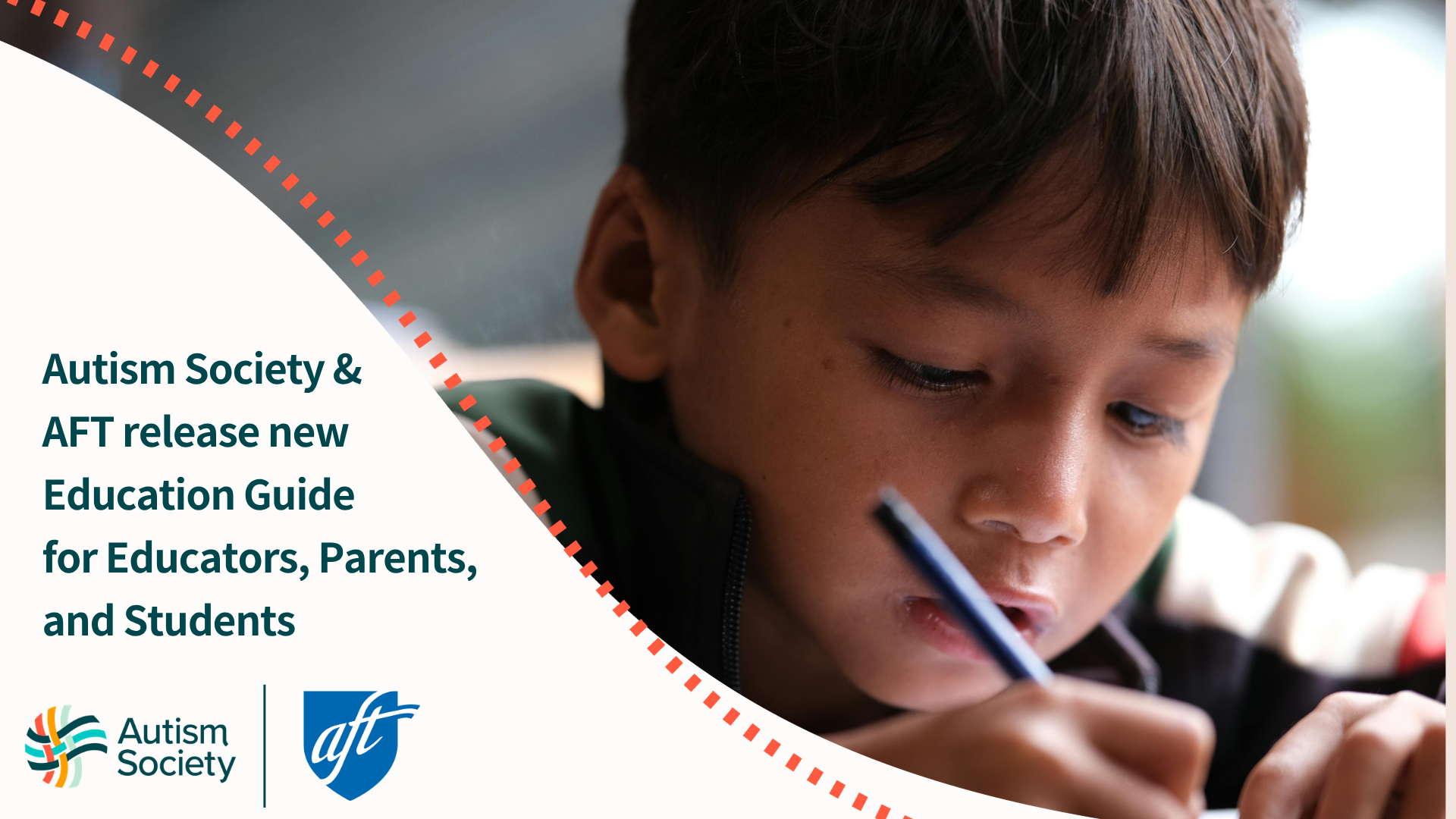
Autism Society of America and American Federation of Teachers Release New Resource, Beyond Acceptance: Autism Inclusion and Equity—A Guide for Educators, Parents, and Students
WASHINGTON, D.C.— July 13, 2026 — The American Federation of Teachers (AFT) and the Autism Society of America announce the release of Beyond Acceptance: Autism Inclusion and Equity—A Guide for Educators, Parents, and Students, a comprehensive resource designed to help schools, families, and communities create learning environments where students with autism are supported, included, and empowered to succeed.
The guide moves beyond awareness and acceptance to focus on meaningful inclusion, educational equity, and belonging. Developed through the collaboration of educators and autism experts, the publication provides practical strategies and evidence-informed guidance for supporting autistic learners across educational settings.
“Inclusion is not simply about opening the door—it is about ensuring every student can fully participate, learn, and belong. Through Beyond Acceptance: Autism Inclusion and Equity, we are reaffirming our commitment to educational environments where students with autism are understood, supported, and celebrated. By equipping educators, parents, and students with knowledge and practical strategies, we can move beyond awareness to meaningful action that creates more equitable schools and stronger communities for everyone”, said AFT President Randi Weingarten.
“Every autistic student deserves a learning environment where they are understood, supported, and empowered to reach their full potential,” said Joseph P. Joyce, President and CEO of the Autism Society of America. “The Autism Society of America is proud to partner with the American Federation of Teachers on this guide, which provides practical tools and strategies to help schools, families, and communities create more inclusive and supportive educational experiences. As autism prevalence continues to rise, resources like this are critical for educators, families, and professionals working together to ensure autistic students have the opportunities, accommodations, and support they need to succeed both in school and beyond.”
“As a former special educator, I saw firsthand that meaningful inclusion requires more than legal protections, it requires educators, families, and communities to have the knowledge and tools to support students effectively every day,” said Delancy Allred, Director of Public Policy at the Autism Society of America. “While my work today focuses on strengthening IDEA, Section 504, and other protections for autistic students, this guide highlights what successful implementation looks like in practice. By providing actionable strategies and real-world guidance, it helps turn the promise of inclusive education into meaningful outcomes for autistic students in classrooms across the country.”
The AFT and the Autism Society of America encourage educators, school leaders, families, and advocates to use the guide as a resource for professional learning, family engagement, and collaborative planning to advance inclusion and equity for students with autism.
About American Federation of Teachers
The AFT is a union of professionals that champions fairness; democracy; economic opportunity; and high-quality public education, healthcare and public services for our students, their families and our communities. We are committed to advancing these principles through community engagement, organizing, collective bargaining and political activism, and especially through the work our members do.
About the Autism Society of America
The Autism Society of America’s mission is to create connections, empowering everyone in the Autism community with the resources needed to live fully. As the nation’s oldest leading grassroots Autism organization, the Autism Society and its approximately 70+ local affiliates directly serve over half a million members of the Autism community each year. It envisions a world where everyone in the Autism community is connected to the support they need, when they need it – including education, advocacy efforts, and supports and services throughout the lifespan
# # #
Share:
Related Posts

Featured
News
Updates and News

Featured
Information Series
Releases
Updates and News