Wandering and Water Attraction
Wandering can happen quickly, and water is often one of the most dangerous destinations because it can be nearby, visually appealing, and difficult to secure fully without intentional planning.
Understanding Wandering
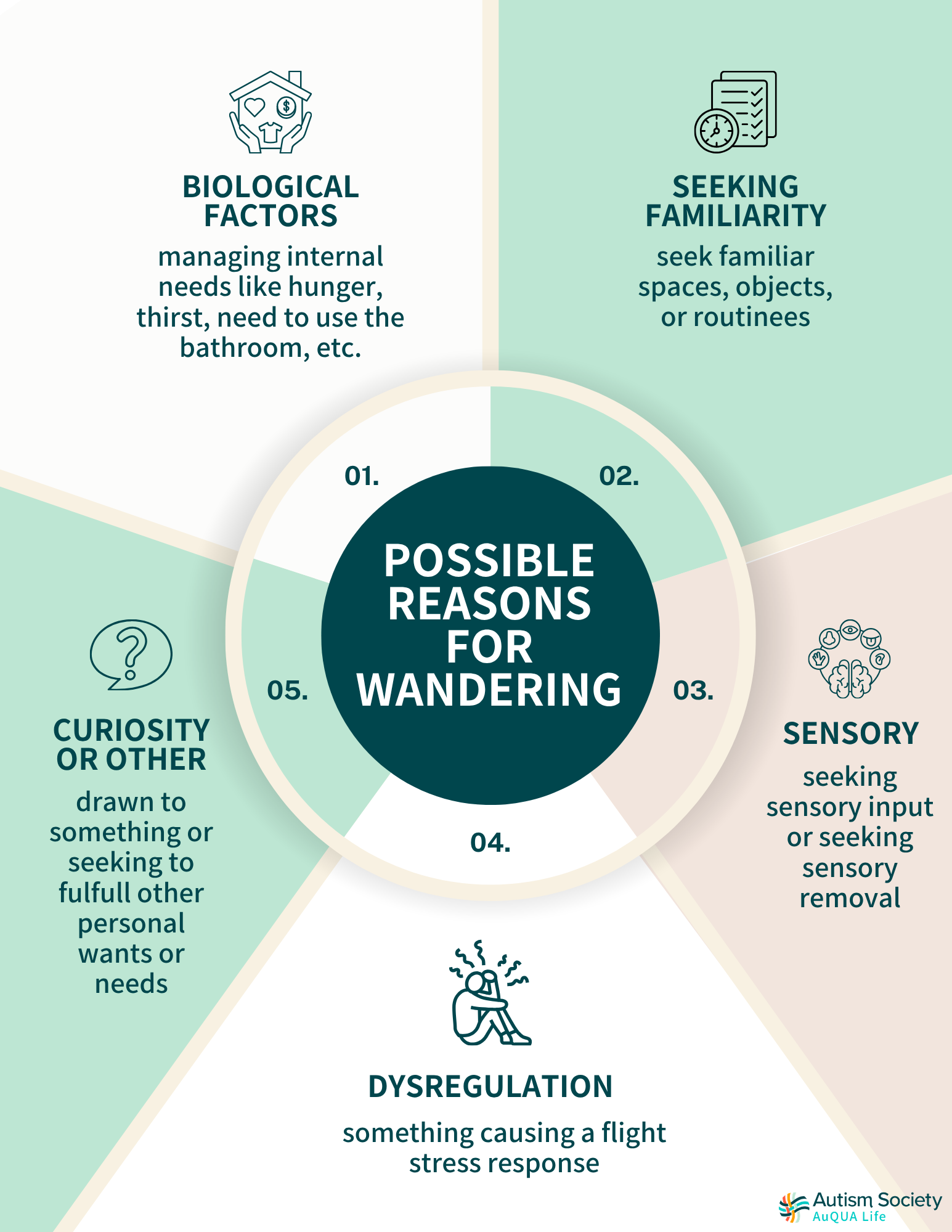
Wandering is not always about running away. It may be connected to curiosity, distress, regulation-seeking, a repeated route, movement toward something preferred, or difficulty recognizing risk. Prevention starts by understanding wandering as a safety reality rather than a moral failure.
Why Water Can Be a Destination
Sensory Appeal
Sound, reflection, movement, and temperature can make water especially inviting.
Visibility
Ponds, canals, pools, or shorelines may be easy to see and therefore easy to move toward.
Reduced Danger Awareness
A person may be drawn toward water without fully understanding its risk.
Prevention
Prevention includes secured exits, alarms, community awareness, current photos, direct supervision, instruction around safety boundaries, and practiced response plans. Families benefit from assuming that wandering could happen even if it has not happened before.