In this issue of Capitol Connection, you will find updates on federal funding and appropriations, key congressional and agency actions affecting the Autism community, and important state advocacy efforts across the country. We encourage you to stay engaged and visit the Autism Society of America’s Action Center to connect with your Legislators on these critical issues.
Disability Policy Seminar
Advocates have less than a month left to register for the Disability Policy Seminar, taking place March 23–24 in Washington, D.C. This annual event brings together self-advocates, families, professionals, and partners from across the country to learn about the key federal issues affecting the intellectual and developmental disability community. Participants will gain insights on current policy priorities and advocacy strategies, then apply what they learn during meetings with their Members of Congress on Capitol Hill. The seminar offers a unique opportunity to elevate the voices and experiences of the disability community directly with federal policymakers. Register today!
Fiscal Year 2026 Funding and Beyond
Congress has passed nearly all Fiscal Year 2026 funding bills, except for the Department of Homeland Security, which remains shut down. Despite this, the Labor, Health and Human Services, and Education funding bill delivered important gains for the Autism community.
The approved funding package provides nearly $400 million for Autism CARES Act–related research and programs. This includes increased support for Autism initiatives managed through the Health Resources and Services Administration. Lawmakers also restored $8 million at the Department of Defense for Autism research, highlighting the federal commitment to advancing scientific understanding and services. Additionally, Congress directed the National Institutes of Health (NIH) to fully implement new components of the Autism CARES Act of 2024 and to continue investing in Autism research. These measures aim to sustain progress in research, coordination, and program development under the updated law.
In education, Congress maintained funding for the Individuals with Disabilities Education Act (IDEA) and other special education programs at the Department of Education. The bill also emphasizes that the Department must maintain adequate staffing to carry out its responsibilities, and that core program functions cannot be shifted without congressional approval.
Beyond funding, two key Autism and disability policy measures were included in the bills:
- The Ensuring Access to Medicaid Buy-In and Programs Act, which expands Medicaid coverage options for working people with disabilities.
- The Lifespan Respite Care Act, which continues support for respite services that help families and caregivers provide long-term care.
The Autism Society is now turning its attention to Fiscal Year 2027 appropriations. The Administration is expected to release its budget requests to Congress after the President’s State of the Union on February 24.
Senate Hearing on Modernizing the National Institutes of Health
The Senate Committee on Health, Education, Labor, and Pensions held an hearing on February 3rd with Dr. Jay Bhattacharya attending as a key witness. As the current Director of the National Institute of Health, Dr. Bhattacharya heard questions regarding the NIH’s efforts to improve health, as well as recent controversies surrounding vaccines, grant disruptions, and the current administration. The Autism Society of America submitted questions for the record, and many Senators chose to ask questions regarding Autism. Both Senator Sanders and Senator Hassan asked Dr. Bhattacharya to address the claim that vaccines cause Autism, and to both he responded that there is no evidence that supports that claim. In addition, he affirmed that under his leadership, the NIH is doing more than ever before to research the causes of Autism.
Government Accountability Office Report on Department of Ed
The Government Accountability Office (GAO), the independent and nonpartisan research arm of Congress, has released a report examining disruptions to the U.S. Department of Education’s Office for Civil Rights (OCR), the office responsible for enforcing federal nondiscrimination protections for students, including students with disabilities.
Commissioned by Senator Bernie Sanders (I-VT), the Ranking Member of the Senate Health, Education, Labor and Pensions Committee, the report found that 2025 workforce reductions and administrative actions left many OCR investigators on paid administrative leave for months while unable to perform their duties, costing taxpayers up to $38 million. During this period, more than 9,000 discrimination complaints were filed with OCR, and roughly 90 percent were dismissed without review.
The report also found that although some staff were later reinstated, OCR continues to operate with significantly fewer investigators than in 2024, despite record complaint levels. The findings raise ongoing concerns about federal capacity to investigate and resolve student civil rights complaints. The full GAO report is available here.
CMS Audit on ABA Therapies
The Centers for Medicare & Medicaid Services (CMS) has announced a multi-state audit examining Medicaid billing for Applied Behavior Analysis (ABA) therapy and related services provided to Autistic individuals. The review follows concerns from federal and state agencies about questionable billing patterns among some providers and payments for services that may not have been allowable under program rules.
CMS is auditing Medicaid claims for ABA services delivered to children diagnosed with Autism to determine whether state Medicaid agency payments complied with federal and state requirements. The audit covers seven states, with reviews in Maine, Wisconsin, and Indiana already completed. In those three states, CMS reported that Medicaid fee-for-service payments tied to ABA and other rehabilitative and community services included millions of dollars in improper payments. The findings are expected to inform state corrective actions and potential policy or oversight changes. The Autism Society of America will continue to monitor the audit process and state responses as additional findings are released. More information is available here.
State Updates
Texas v Kennedy
Texas and eight other states, Alaska, Florida, Indiana, Kansas, Louisiana, Missouri, Montana, and South Dakota, have filed a new legal challenge to Section 504 of the Rehabilitation Act and its integration mandate, a key disability rights protection that supports people with disabilities living in their communities rather than institutions.
This protection, affirmed by the U.S. Supreme Court in Olmstead v. L.C. (1999), requires services to be provided in the most integrated setting appropriate and recognizes that unnecessary institutionalization violates disability rights law. The states are asking a federal court to strike down the current Section 504 rule, block its enforcement, and allow policies that could place people with disabilities at serious risk of institutionalization.
Advocates warn that if the states succeed, it will become harder for people with disabilities and their families to secure community-based services, potentially leading to more people being forced into institutional settings. The case continues earlier litigation known as Texas v. Becerra, now Texas v. Kennedy, and could significantly weaken federal disability protections.
If you live in one of the nine states in the lawsuit, please use our Action Alert to message your Governors and Attorney Generals to explain the importance of Section 504 and ask them to drop the lawsuit.
Iowa
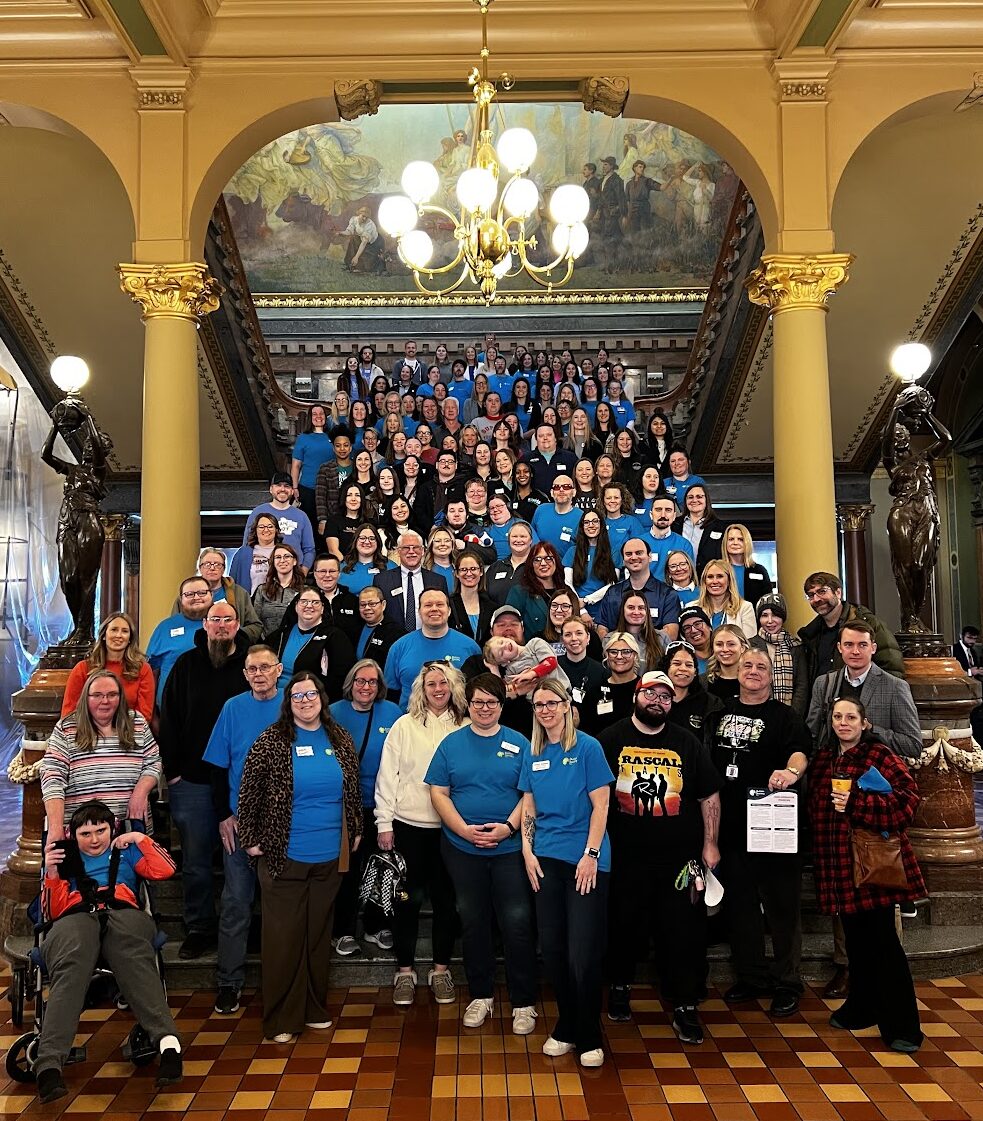
The Autism Society of Iowa held their annual Advocacy Day at the Capitol in Des Moines. Over 200 advocates joined the affiliate to meet with their state legislators and make their voices heard.
Maryland
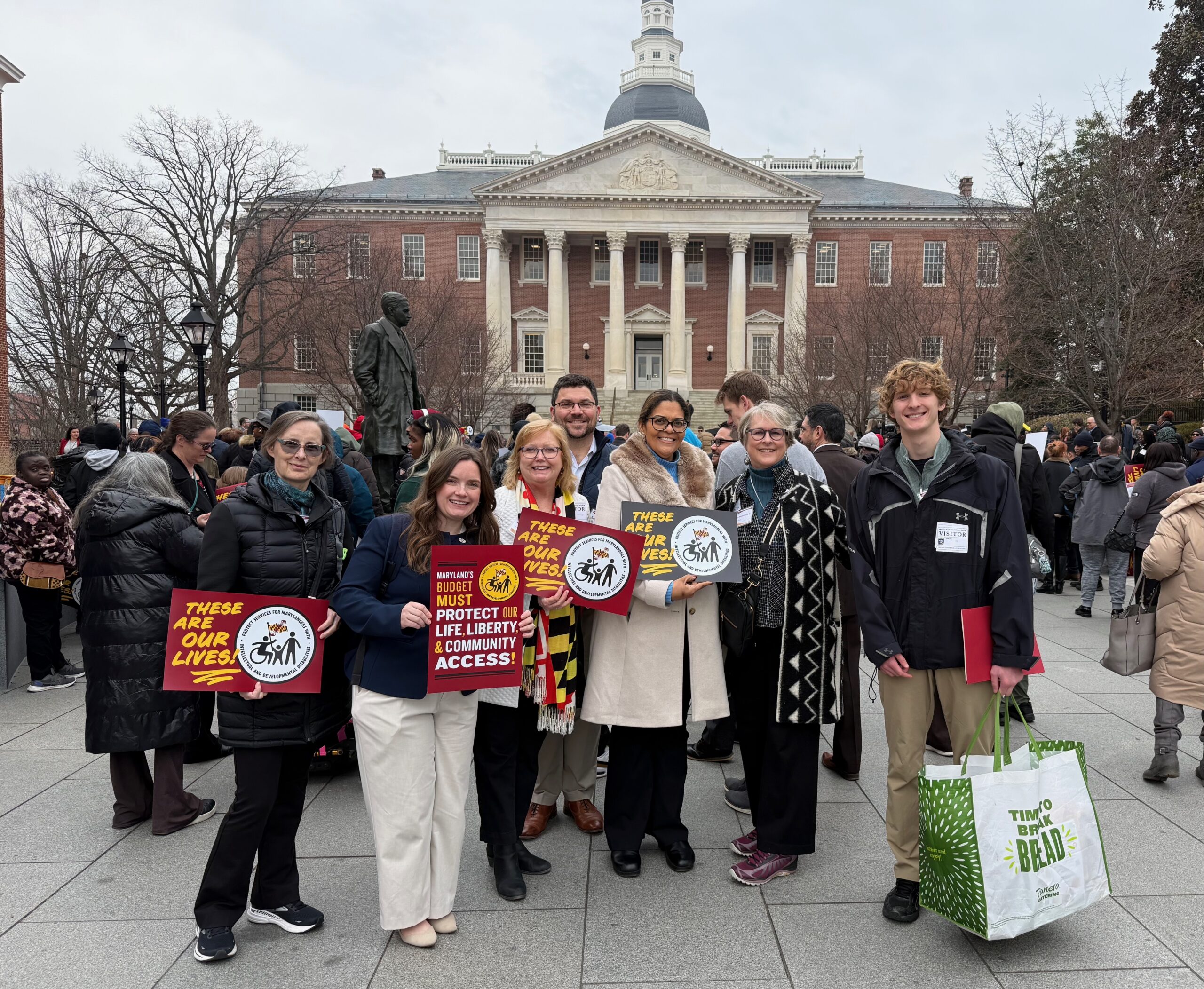
The Autism Society of Maryland participated in the Maryland Developmental Disability Advocacy Day. Over a thousand advocates joined to meet with their state legislators to discuss the importance of protecting DD services, education, and housing opportunities.
Share: