May 18, 2026, Rockville, MD — The Autism Society of America was proud to be a recipient of a grant from the WITH Foundation, whose commitment to improving healthcare access for underserved communities makes initiatives like this possible. Through the Autism Society’s Health Equity arm and Autism Justice Center, Project Unlock PEACE advanced critical efforts to support Autistic individuals and those with intellectual and developmental disabilities (IDD) in correctional settings.
Project Unlock PEACE focused on equipping correctional healthcare professionals, administrators, and corrections officers with the tools and knowledge needed to better serve this marginalized population. Through targeted training, the project worked to improve both physical and mental health outcomes by increasing understanding of Autism and IDD, offering practical support strategies, and introducing effective behavioral interventions. The project was piloted in North Carolina in 2025.
An important strength of this initiative was the integration of lived experience and subject matter expertise. Sam Brandsen, PhD, an Autistic researcher, joined the project team, further grounding the work in both research and lived experience. Cierra Cobb, Executive Director of I Kare NC; Cindy Tate Gibson, music therapist; and Zach Tackett, pharmacist, also brought personal and professional insight related to Autism and incarceration, ensuring the project reflected real-world needs and perspectives.
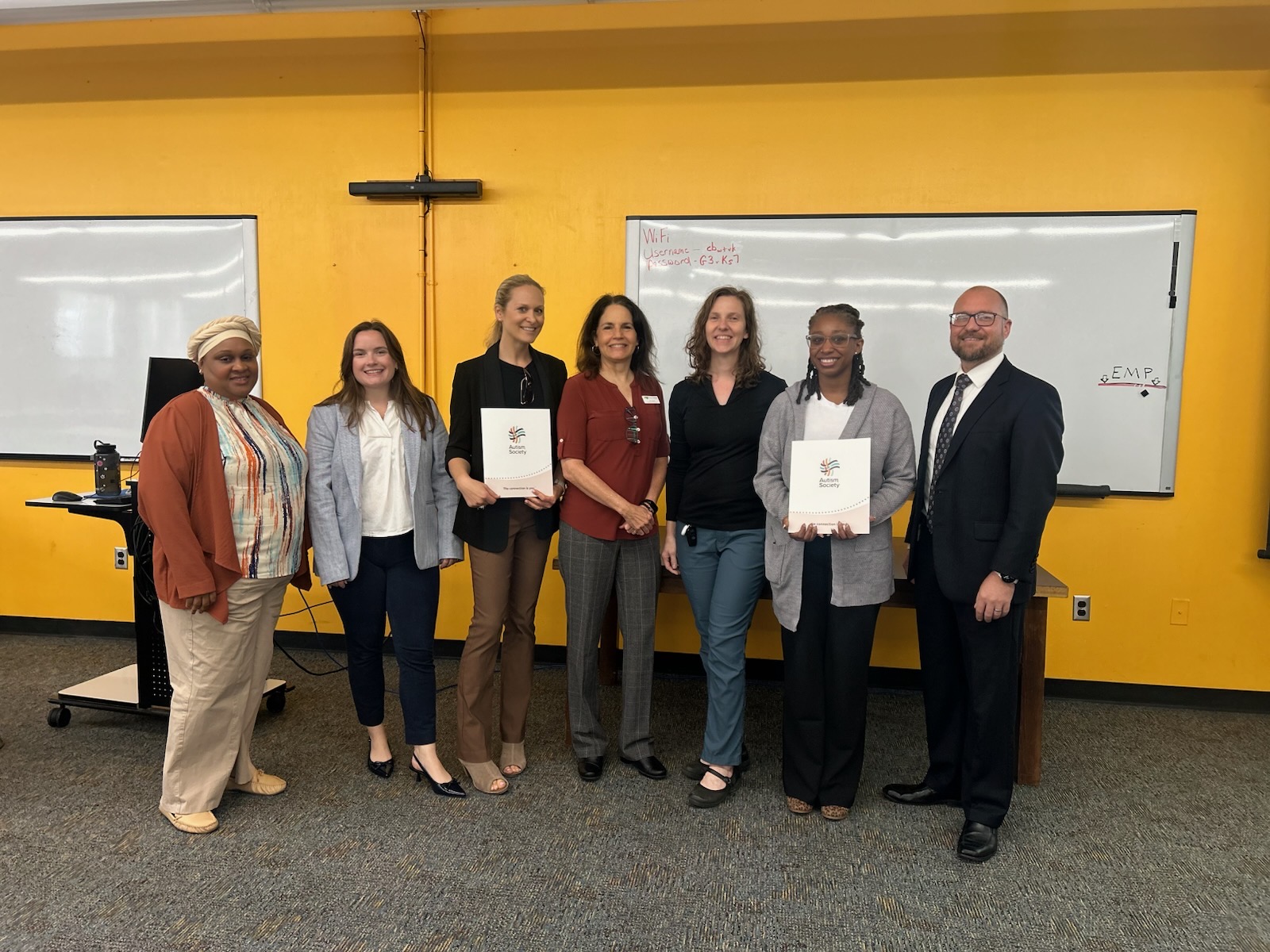
A major milestone was achieved through collaboration with the North Carolina Department of Adult Corrections, which enabled the team to deliver an in-person, half-day training to 65 health and behavioral health specialists. The session included a panel discussion featuring Autistic advocates and the Autism Society of North Carolina affiliate. Additionally, it offered accreditation for two CME credits and provided hands-on exposure to inclusive communication strategies and sensory tools.
Following this pilot training, the curriculum underwent further refinement based on participant feedback and partner input. This valuable input strengthened the content before it was formally recorded, allowing the Department of Adult Corrections to distribute the training more broadly across facilities statewide.
In collaboration with advocates and partners, the project also produced eight high-impact resources designed to improve understanding, communication, and support for Autistic individuals in correctional settings. These tools were identified as essential for practical, day-to-day use and will be disseminated across 55 prison facilities throughout North Carolina. All resources are available for free download through the Autism Justice Center webpage.
As Cierra Cobb, Executive Director of I Kare NC, shared: “Participating in the Autism training with the Department of Adult Correction was a powerful experience because it showed just how much opportunity there is to improve the way correctional staff understand and respond to neurodivergent individuals. Too often, behaviors connected to Autism are misunderstood as defiance, noncompliance, or disrespect, when in reality they may be signs of sensory overload, communication differences, anxiety, or a need for more clarity and support. Being part of this training reminded me that education can shift mindsets, reduce harm, and help staff approach people with more awareness, patience, and humanity.”
This training is needed in all correctional settings because Autistic individuals are especially vulnerable when their needs are not recognized. Without the right knowledge, staff may unintentionally escalate situations that could be handled with simple accommodations, better communication, and trauma-informed responses. When correctional professionals are equipped to recognize Autism and respond appropriately, it creates safer environments for everyone involved. This is not just about training staff; it is about protecting dignity, reducing unnecessary punishment, and building a correctional system that responds to people’s needs with care instead of confusion. The Autism Society of America, Autism Society of North Carolina and our partners look forward to continuing this critical work.
Share: